The Power of Strategic Distribution: How 'Clear' Water Achieved 17x Growth
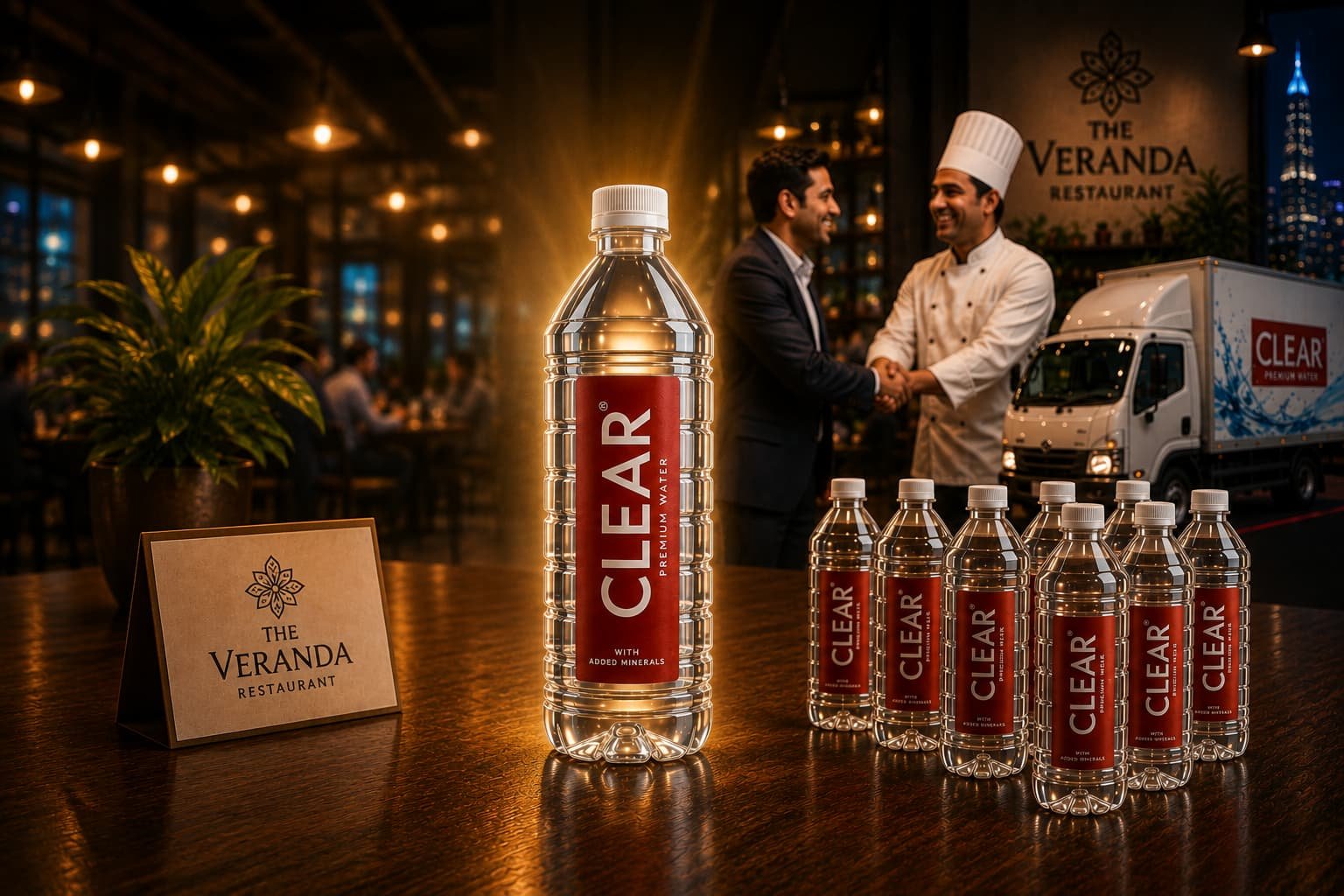
How a Bottled Water Brand grew 17x by not spending a Penny on Advertising
Launching a bottled water brand is one of the most challenging business ideas to undertake.
After all, water is one of the most commoditized products in the world. Every company tries to position its offering as high-quality, pure, and safe, but in the end, all the bottles tend to look similar to the consumer.
Now, imagine having to compete against beverage giants with decades of experience and billions of dollars in ad spending.
The most logical decision would be to invest significantly in marketing to convince the consumer to choose your brand over your competitors’. Alternatively, you could cut prices to make your product more attractive.
But what if you could do something else?
Clear Premium Water is a company that decided to pursue a different path. According to reports, the brand managed to increase its revenues by 17x during 2020-2024 without spending a significant amount of money on advertising. Instead of fighting the competition on the supermarket shelf, Clear decided to go after a different type of customer.
The company stopped trying to convince individual consumers to buy its product.
Thinking Outside the Bottle
Most bottled water companies focus on the end-users, trying to get them to choose one brand over another. But Clear Premium Water took a different approach. The company stopped chasing consumers and went after businesses instead.
The idea was simple. Instead of trying to get restaurants and cafes to buy Clear-branded water, the company wanted to become a partner in promoting the establishment. How?
Clear Introduced the concept of branded water.
When a customer walks into a restaurant, they are used to seeing the establishment’s logo and name. But what if they saw it on the water bottle as well? Suddenly, the consumer feels like they are getting an enhanced experience.
For the business this is a way to promote the business without spending any money on advertising. All the business has to do is switch to branded water and put the business logo on the label.
The company then works with restaurants, cafes and hotels. Helps them by putting their logo on Clear-branded water. This way the company is a partner to these restaurants, cafes and hotels. Helps them give their customers a better experience when they visit.
This deal is good, for both the business and Clear. The restaurant, cafe or hotel gets to promote the business without spending money on marketing and Clear gets to sell more water and work with the business for a long time. Clear and the business both benefit from this deal.
But how did this approach make the company 17 times more valuable in just four years?
Creating Customer Lock-in
The most interesting part about the Clear’s story is that it did not only attract new customers. The company also made sure that the partners wanted to continue working with the brand.
Once a restaurant switches to Clear-branded water, it becomes much harder to go back to the previous supplier. For one, the establishment will have to spend money on rebranding the water, which could be expensive.
Moreover, the customers will miss the branded experience, meaning that the restaurant will have to spend extra money on convincing them that the switch is necessary.
This is where the concept of lock-in comes into play. Simply put, switching to another water brand becomes too costly and inconvenient for the establishment, meaning that they are much more likely to stay with Clear.
In the end, one company’s decision to stop chasing consumers and start partnering with businesses allowed it to grow exponentially.
A Smarter Way to Grow
Many companies assume that to grow, you need to invest significantly in advertising.
Clear demonstrated that there is an alternative.
While many were busy trying to come up with creative ad campaigns that would resonate with consumers, the company focused on another area - the business partnerships.
Each of the restaurants that distributed Clear’s product became a medium for the company’s marketing campaign.
Moreover, hundreds of customers saw the customized Clear water bottle every day.
By doing so, the company continued to benefit from word of mouth and a steady stream of revenues from its commercial partners, having managed to avoid the high cost of traditional advertising.
The Bottom Line
Thus, the company achieved its goal - both in terms of promoting its product and building long-term relationships with its business partners.
As a result, the company could report that as of 2020, Clear was present in around 90 restaurants, whereas by 2024, that number grew to about 1600.
Today, it is believed that most of the company’s revenue comes from the hospitality industry, illustrating the power of such a business strategy.
Now, instead of targeting the end user, Clear targets the resellers of its product and builds mutually beneficial relationships with them.
The Product Was Not the Point
One of the key insights that Clear illustrated was that the end-consumer rarely buys what you are selling. Rather, they buy what they buy your product for. For example, Clear restaurants did not buy the water because they wanted clean water. They bought it to provide a better dining experience and promote their business and brand. In other words, they purchased an enhanced perception of their restaurant. It is the perception, not the water in the bottle, that made Clear such a great product to buy.
5 Secrets to Build a Business Empire
The company managed to achieve its goals because it understood some crucial aspects of building a competitive business. First, in the battle for the consumer’s wallet, it was not the cheapest offer that won the battle. Rather, it managed to provide additional value that could not be easily found elsewhere.
Next, to fully capitalize on the value proposition, one has to understand what the customer really wants. In this regard, Clear demonstrated that it truly understood its consumer, having managed to identify that the restaurant owners wanted to improve the perception of their brand.
Besides, a company can grow significantly if it builds lasting relationships with its business partners. In the case of Clear, an agreement with the restaurant usually means ongoing business. This way, the company does not have to constantly search for new consumers; instead, it focuses on maintaining relationships with the existing business partners.
Finally, in its marketing efforts, the company demonstrated that sometimes the best marketing campaigns are the ones when you are not actually marketing. In other words, the best approach is to identify a problem that the consumer has and then offer your product/service as the solution.
Selling Solutions, Not Products
Many companies waste years trying to find a way to convince consumers that their product is the best.
Clear asked a different question.
"How can our product improve our customer's business?"
This different way of thinking has led to a more innovative approach to their industry, as they have turned an everyday bottle of water into a branding opportunity.
No longer do they have to compete on price, as their unique approach has created value for their customers.
Their approach is a valuable lesson for innovative companies everywhere, as their unique business approach has led to their product seeing a major increase in value.